It wasn’t long ago that important reports at DMK were still created through extensive manual work.
Even if, as the saying goes, one should imagine Sisyphus as a happy man, the reality looked like this: collecting figures from different sources, comparing spreadsheets and manually transferring data into Excel files.
Compiling the information for the Management Information System alone could take almost a full week. And the same question kept resurfacing: are these really the latest figures – or is there an even newer version somewhere else? The reason was simple: data existed across different systems, files and evaluations. Much of it had to be merged manually. That took time and made the process vulnerable to errors.
Data in one central place
Today, things look very different. And this is exactly where Data Management comes in. At its core, the idea is simple: the right information should reach the right people at the right time – and in reliable quality. It sounds obvious, but in large organisations that is anything but straightforward. Four years ago, DMK established its own dedicated department to bring together expertise at the interface between IT and business: Business Intelligence & Data Analytics.
Because every single day, enormous amounts of data are generated at DMK. Colleagues monitor developments in milk prices, analyse market reports and track competitor information. But that immediately raises a crucial question: Where does all of this information actually come together?

From raw material to information
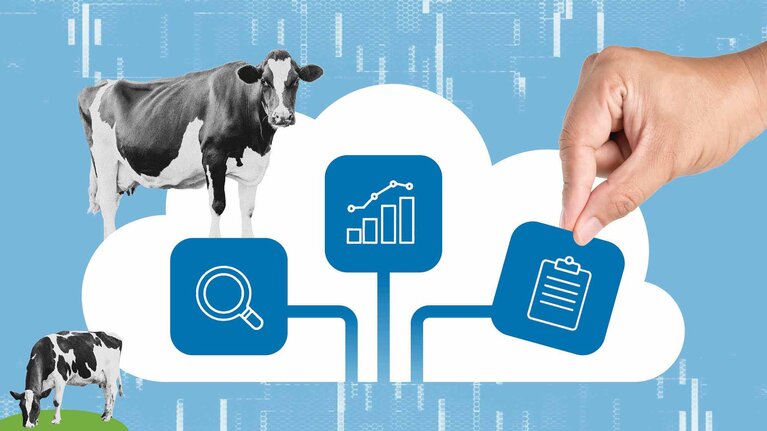
One practical example from everyday operations is DMK’s central milk price reporting. Since last year, this information has been provided via SAP Analytics Cloud (SAC) – a platform for reporting, planning and analysis. Relevant market data is consolidated there and presented in a clear format. Instead of searching through multiple files, the most important key figures can now be accessed instantly at the push of a button.
The process can be compared to a dairy itself. Raw milk delivered to the plant does not immediately become finished yoghurt. First, the milk is collected, checked and processed before eventually turning into a product that reaches supermarket shelves.
Data works in a very similar way. It first has to be consolidated, verified and prepared before reliable information can emerge from it. Compared to the past, the biggest difference lies in speed and quality. Many data streams now run automatically in the background. Reports can be created much faster, and everyone works with the same consistent figures. This is now supported by GBS (Global Business Services). Master data processes are consolidated centrally, key information on customers and materials is maintained in one place, and data quality is continuously ensured.
Reliable and transparent
This becomes highly visible in day-to-day operations at DMK. When market prices shift or new competitor information becomes available, these developments can now flow into central reporting much more quickly. Decision-makers recognise trends earlier and can respond faster – whether in pricing strategies, market evaluations or planning processes. The real advantage, therefore, is not merely that figures are available more quickly. It is that they are reliable, comparable and transparent for everyone involved. Or put differently: at DMK, Data Management ensures that countless individual data points become one clear overall picture – and therefore a far stronger foundation for decision-making.