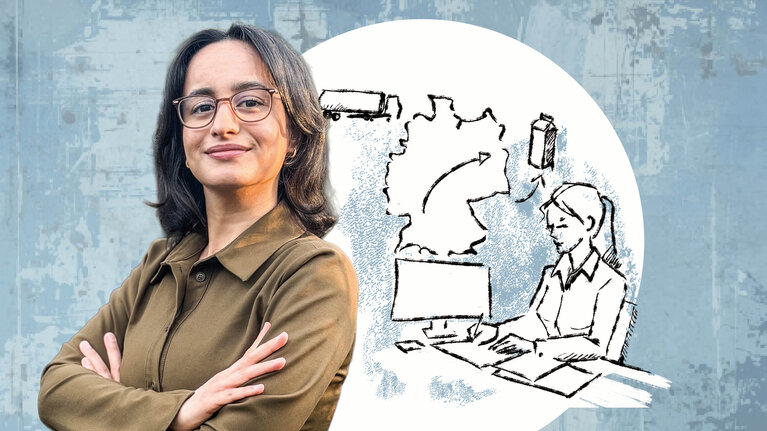
First the apprenticeship. Then the continents.
Egypt, Cuba, Senegal, the USA – and it all began with an apprenticeship as an industrial management assistant at DMK. How Esra Özsoy turned half the world into her workplace.
“Sometimes I sit down at my laptop in the morning, write an email to West Africa while replying to an enquiry from Curaçao – and briefly think: how exactly did I end up here? The answer starts in August 2016 – with an apprenticeship as an industrial management assistant at DMK. I was curious, open-minded, but cautious. Not out of fear, but out of deep respect for everything I didn’t yet know. I wanted to understand before I judged or acted. That mindset stayed with me through every department: logistics, procurement, HR, marketing, accounting, sales. Every team had its own vocabulary, its own pace. I absorbed it all.
Coordinating. Prioritising.
After completing my apprenticeship, I was taken on directly. Today, as a Customer and Commercial Services Specialist Export, I’m the link between DMK and its customers across Africa, the Middle East and North, Central and South America. In practical terms, that means: when a major customer in the Dominican Republic orders fresh dairy products, I’m the person making sure the right goods arrive at the right port at the right time – including export documentation, customs regulations, cold chain logistics and customer communication. I coordinate, prioritise, make decisions. No two days are alike. That’s exactly what I wanted. Then came the years nobody saw coming: the pandemic, the global supply chain crisis, closed ports, disrupted shipping routes. One customer in West Africa was waiting for a delivery stuck somewhere in the Mediterranean. We reorganised, found alternative routes and kept the customer updated every single day – even when there wasn’t good news to share. That’s what defined DMK during that period: no false promises, but complete commitment. As a team, we set priorities together instead of competing against one another.”
A turbo boost for personal growth.
“Today, I’m a different person from the woman who cautiously walked into her first department in 2016. I make decisions calmly and clearly. I’ve become resilient – not despite difficult periods, but because of them. For me, training at DMK wasn’t a stepping stone to something else. It was the beginning of who I am today.”
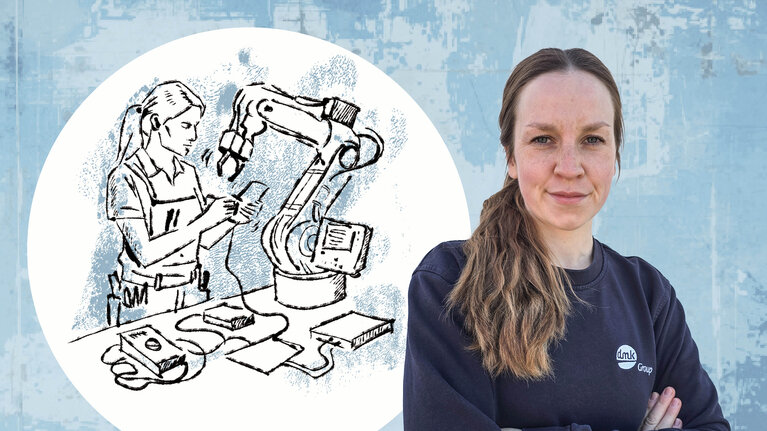
When DMK becomes part of the family story.
Ten years with the company – but the roots go back even further. How Kirsten Cordes followed in her father’s footsteps while leaving her own mark.
“DMK isn’t a company I discovered at some point in my life. It’s been part of my story for as long as I can remember. My father has worked here for more than 30 years. That shaped me as a child. I understood early on what happens behind the scenes at a dairy, what maintenance really means, and why functioning machinery should never be taken for granted. In August 2016, I started my apprenticeship as a mechatronics technician – curious, motivated and eager to take on responsibility as soon as I felt ready. That moment came faster than expected. After graduating, I was taken on as an industrial mechanic, diagnosing faults, developing solutions as part of a team and learning that technical expertise alone isn’t enough. Reliability, clear communication and seeing the bigger picture matter just as much.”.
Different challenges every year.
“Why did I stay? Because every year felt different from the one before. During my apprenticeship, I built the foundations and realised how important independent work is. As an industrial mechanic, I deepened that knowledge and experienced what it means when a team truly sticks together during difficult moments. Complex malfunctions, unexpected breakdowns, time pressure – situations like that bring people closer. And every single one helped me grow. Maintenance work is technically demanding, but above all, it’s the atmosphere within the team that makes it easy to come in motivated every morning. That may sound simple. But it isn’t.”
Responsibility and perspective.
“I took the biggest step in my current role. As a Key User and Specialist Maintenance, my work is no longer only about technology, but also organisation, communication and understanding wider processes. I analyse when machines need servicing or maintenance before unexpected downtime occurs. At the same time, I act as an interface to the digital systems controlling our maintenance operations and support colleagues whenever problems or questions arise. Explaining things and supporting others has become just as important to me as the technical side. My father taught me early on that machines are only ever as good as the people looking after them. Somehow, I now feel at home in both worlds.”
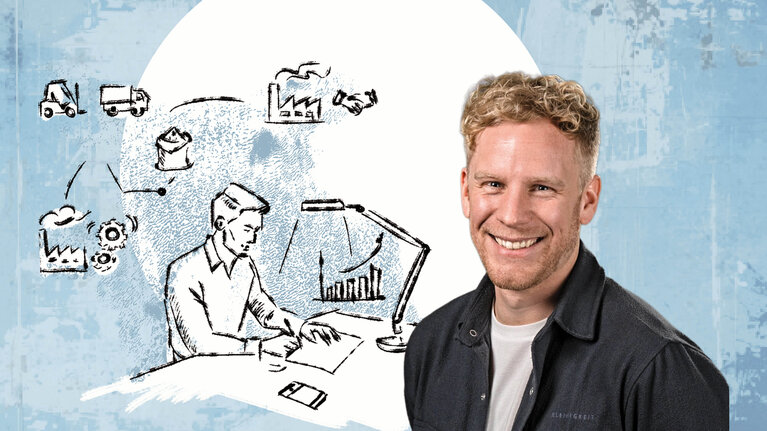
From the maze to a leadership role.
Lukas Ringen started at the very bottom – today, he carries responsibility as Head of Operations Controlling. What shaped him, what made him stay and how his role has completely changed over the years.
There’s one image he has never forgotten: a long corridor, countless doors, a young man trying to find his bearings – not just physically. It was his first day as a trainee, and he had no idea how he would ever find his way out of the maze. That was more than eleven years ago. Today, as Head of Operations Controlling, Lukas Ringen oversees cost management involving billions – and when he talks about that first moment, he sounds like someone who discovered something valuable.
Seven departments, one direction.
Ringen completed his apprenticeship as an industrial management assistant at DMK. He started in raw materials management, moved into accounting, later worked across seven or eight departments and completed his final apprenticeship project in HR. “Those changes helped me gain crucial experience,” he says. They gave him the confidence to step into more senior positions after his apprenticeship. “I became prepared for the unknown – and that allowed me to take on responsibility much faster. That’s still incredibly valuable to me today.” He describes the turning point very precisely: a project called One Finance, around six years ago, aimed at making the finance department faster, more modern and more business-oriented. During the project, he was given the opportunity not only to gain technical insight, but also to take on a leadership role, work with people and help shape something bigger than his own responsibilities. “That’s when I realised I wanted to continue building my future here long term.” No grand speeches. Just the quiet certainty of someone who knows exactly what he wants.
Numbers that shape decisions.
Head of Operations Controlling sounds like spreadsheets and budgets. And once upon a time, that was mostly true: checking invoices, entering figures into tables, preparing reports, looking backwards. Today, the role is entirely different. Forecast analysis, budget planning, identifying savings potential, advising management and developing initiatives to make the company more efficient. “We don’t just provide data. We help define direction.” His team oversees costs of around three billion euros, including raw material expenses, regularly contributing to decisions involving six- and seven-figure impacts. One example: years ago, his team recommended closing a production department based on data analysis. Today, the same team recommends reopening it – because market conditions and data have changed. “That shows just how close we are to the decisions that really matter.”
600 people, one Mexican wave.
Alongside his role, Ringen organises the DMK Cup. One moment from the event has stayed with him: a spontaneous Mexican wave rolling through the stands. Six hundred people, one movement, one team. “In that moment, you could feel the energy that emerges when people carry something together.” That’s what he takes from his voluntary work into everyday life: the conviction that major challenges can only ever be overcome collectively.
Calmer. Not indifferent.
“In the past, I often tried to please everyone – and that simply doesn’t work,” he says. Today, he is calmer, more structured and better at letting go of things he cannot control. When would it be time to leave the company? “The moment I no longer feel able to shape things.” That moment hasn’t arrived. “I feel we’re consistently moving in the right direction – and that gives me energy for everything still ahead of us.”
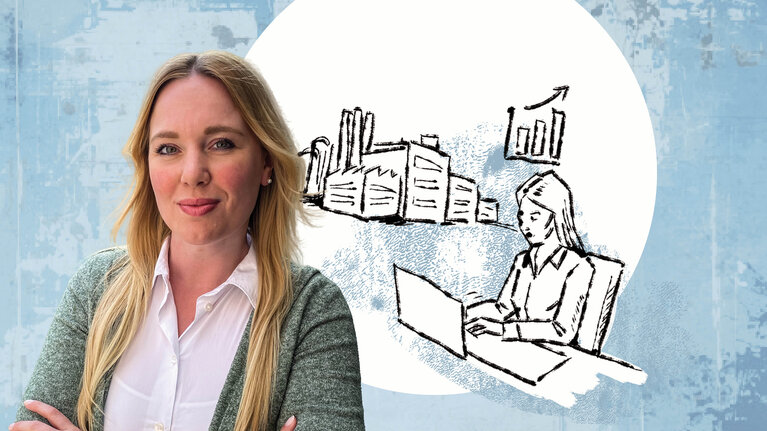
“We need more cheese crates”
Vanessa Baumann originally wanted to work in corporate communications. Instead, she ended up in supply chain management – and found exactly what she had been looking for all along.
Ever since she can remember, Vanessa Baumann has been organising family celebrations – and, in a way, she never stopped. Only the scale changed. The principle stayed the same. Today she is 34, and whenever someone asks why she has stayed with the same company for almost thirteen years, she comes back to one image: many individual pieces coming together to form something complete. When it all works out, that’s her moment.
A different path than planned.
In 2013, she began her apprenticeship as an industrial management assistant at DMK. Every two months brought a new department: sales, milk collection, HR, marketing. She absorbed everything, completed her project work in corporate communications and felt she had found both her team and herself there. After finishing her apprenticeship, she wanted to stay in communications. Then came a hiring freeze. As someone who enjoys connecting people, explaining things and shaping ideas, she had imagined her future there. Instead, another position opened up – in supply chain management. It sounded like spreadsheets. Planning figures. She accepted the role.
What logistics really means.
“And very quickly, I realised my image of the job had been completely wrong.” Modern supply chain management, she says, is not quiet back-office work. It’s a control centre. Vanessa Baumann plans inventories, manages goods flows, coordinates scheduling and production and organises which orders run when. She mediates between plants, sales teams and customers whenever priorities need to shift. In the cheese business, that means monitoring maturation times, securing packaging materials in time and, when a batch matures longer than planned, finding customers who can still use it sensibly – for example as grated cheese for pizzas or gratins. “You are anything but a quiet planner sitting behind a desk,” she says. “This job lives through communication.” Every day she speaks with shipping, sales, quality assurance and production. Quite literally: there is hardly a day when she is not coordinating, deciding or improvising.
Dreaming about cheese crates.
How much the work affects her became clear in a story she can laugh about today. At the beginning of her time in supply chain management, there was a shortage of cheese crates needed for maturation. The problem wouldn’t leave her mind. One evening, she fell asleep on the sofa and her partner woke her because she was murmuring in her sleep: “We need more cheese crates.” Early on, she was given responsibility. At the Edewecht cheese plant, a new production line was being planned – high investment volumes, tight deadlines. Baumann coordinated interfaces, prepared data and helped align production, material availability and capacities. For some people, it would have been overwhelming. For her, it was motivation.
When the world interferes with the cold chain.
Then came the pandemic. Supply chains stalled, markets shifted, production plans had to be rewritten repeatedly at short notice, including sourcing entirely new packaging materials. Later came other crises. When a container ship blocks the Suez Canal or tariffs rise overnight, a German cheese company feels it too. Delivery times shift, costs rise and plans need rethinking. “Geopolitics isn’t abstract,” she says. “It lands almost directly on my desk.”
Why she stays.
Thirteen years. One company. Why? “Because my role has constantly evolved and never become repetitive,” says Baumann. “Because I’m challenged, trusted with responsibility and able to keep developing.” She feels valued at DMK. And she needs the feeling that she can make a difference. Exactly the same feeling she already knew as a child when planning family celebrations – that moment when everything came together and everyone felt comfortable. Only today, she is no longer coordinating private parties. She is coordinating supply chains. Across the globe.