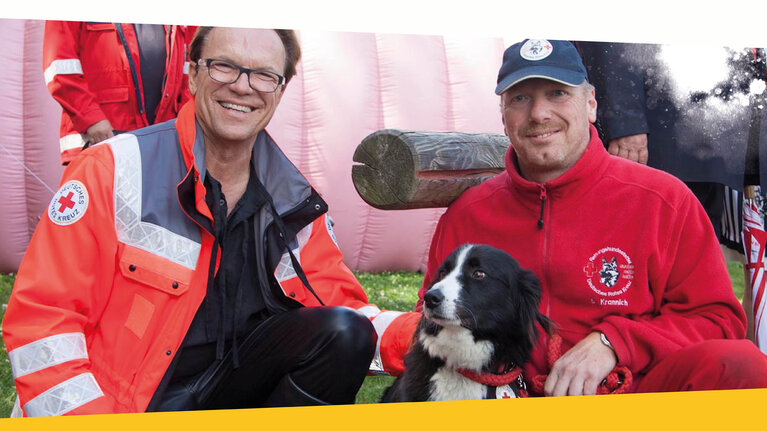
At night, on weekends, sometimes in the middle of a holiday, Sven Krannich is the person people call when someone doesn’t come home. As head of a DRK search-and-rescue dog team, he is deployed whenever someone goes missing somewhere between the Baltic coast and the Uckermark region - a child, a person with dementia, someone who has simply disappeared. By day, at the DMK dairy in Altentreptow, he is the person people call before anything happens.
As a safety engineer and occupational safety specialist, Krannich walks through production halls looking for the things others overlook: a wrongly stored chemical, a blocked emergency exit, a machine vibrating in ways it shouldn’t. He knows every escape route, every fire suppression system, understands exactly which cleaning agents and process chemicals can become dangerous under which conditions. His job is to think the unthinkable - so that it remains unthinkable. It’s not a mindset he learned at university. He trained it, operation by operation, with a Border Collie by his side.
He came to search-and-rescue work through his wife. Both had been instructors with the water rescue service and long connected to the German Red Cross. Then they got a dog - intelligent, restless, made for tasks. So they founded a rescue dog unit. What began as a practical solution for an energetic working dog became a second calling.
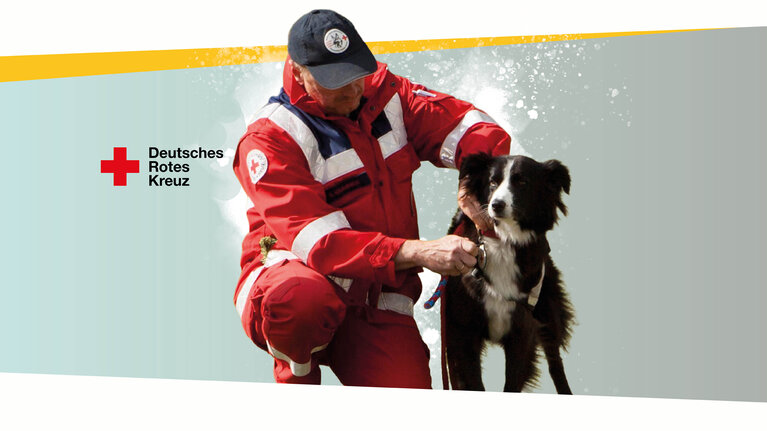
When the emergency control centre raises the alarm, Krannich takes charge as operations leader. He assesses the situation with other emergency services, divides search areas and coordinates teams in the field. Sometimes he heads out himself, Border Collie leading the way, into places no one would willingly enter. “You grow together as a team in this kind of work,” he says. “You know each other’s strengths, limits and quirks. You know who you can trust when it’s dark and the terrain becomes difficult.”
The hardest operation of his career took place on the island of Rügen. A mother and two daughters had been caught beneath a collapsing chalk cliff. One of the daughters was buried. It was Christmas. The team searched. They found her -Ä but not in the way everyone had hoped. She was dead. What remained was the family’s chance to say goodbye. Later, at the memorial service, they approached Krannich and thanked him. Not because he had saved her. But because he had helped. Moments like that cannot simply be taken off like protective equipment. They change the way you look at everything that comes afterwards. Krannich doesn’t talk much about it.
He simply heads out again when the phone rings.