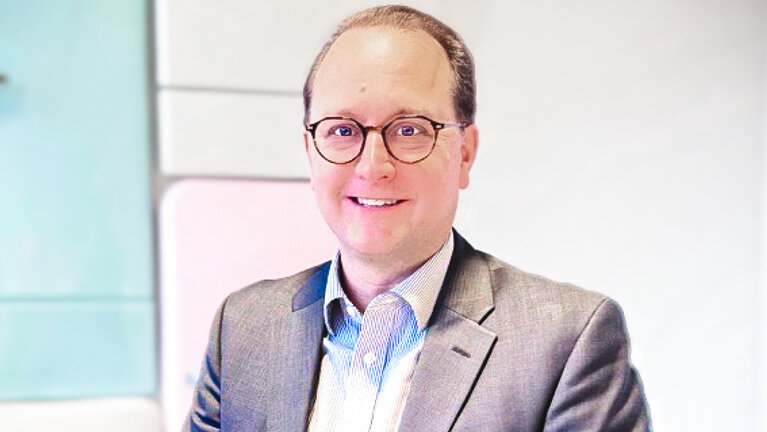
Last summer DMK’s female and male farmers approved the merger with Arla by a large majority. Can you already feel within the company that “things are getting started now”?
Ingo Müller: What you feel more is that we are entering a new phase. The approval was a milestone. Now the phase of structured preparation begins - not operational implementation. For everyone at DMK, it is still business as usual. And we aim to do that as well as possible. We are not waiting on the sidelines until the merger is approved; we continue to do what we have always done: collect milk, process milk and market milk.
Many employees and dairy farmers are still asking: when will a potential merger become noticeable?
Ingo Müller: Until approval by the competition authorities, it will not be particularly noticeable. Everyday work will remain unchanged until that decision, and Arla and DMK will continue to operate completely separately. Only once the authorities give the green light to the merger plans will integration begin. And that, too, will be a longer process that will not happen overnight. We are planning within a time horizon of around two years in total.
What happens now?
Philipp Inderhees: A selected group of colleagues is currently beginning to prepare for integration after the merger, insofar as this is legally possible. The goal is to ensure that there are no “jolts” during a transition, but that the business can continue to run smoothly. The central objective is to ensure business continuity from “day one” of the merger. Colleagues are dealing with legal issues, the overall framework, principles and mechanics of a merger. Actual integration steps are not permitted before we are a joint company. This makes it all the more important not to be unsettled now and to continue production with the same motivation as before.
So patience is still required …
Ingo Müller: Yes, that is also legally required. Our owners approved the merger plans by an overwhelming majority. We are currently waiting for review by the competition authorities. That really does mean patience. It is important to us to keep employees continuously informed during and after the merger. We want to remove uncertainties as far as possible. Our team is our most important resource. We want it to remain committed and connected to the company.
”No farmer will be pushed into new systems from one day to the next.”

How do you assess the merger in terms of content – especially from the farmers’ perspective?
Philipp Inderhees: As a major strategic opportunity. The extremely high level of approval among farmers shows that many have recognised that the challenges of the future – market volatility, sustainability requirements, investment needs – can be addressed better together. In day-to-day life on the farm, however, the focus naturally always remains on the individual holding.
The milk market is currently under pressure. How does a merger ambition fit with that situation?
Ingo Müller: It fits very well, because it explains the necessity. We are currently seeing an oversupply of raw milk combined with stable but not growing demand. Prices have fallen. In such a phase, it becomes clear how important operational strength, efficiency and market access are - today at DMK, and in the future together with Arla.
Does that mean the merger is a reaction to the current market situation?
Ingo Müller: No, it is an answer to fundamental structural developments. In this merger, farmers are joining forces, united by their belief in the cooperative model and by their overwhelming support for a shared future. We will secure a milk price that is competitive in the long term and the ability to invest in our own future, and together with Arla create a solid home for Europe’s dairy farmers of today and tomorrow. All of this is based on a cooperative model that remains strongly rooted in the local foundations of the individual member farms. Local roots combined with global reach create a company with even greater ability to meet the world’s growing demand for protein.
Many questions at the recent district meetings revolved around economic prospects. How do you assess the current situation?
Ingo Müller: The market is volatile and will remain so for the time being. The global price level for dairy products has fallen by around one third since late summer. Butter, cream, skimmed milk powder - everything is under pressure. At the same time, it is important to see that DMK is operationally stable. Our business units in raw milk processing have improved, and areas such as whey, TURM cream or infant nutrition have contributed to stabilisation.
”Now the phase of structured preparation begins – not operational implementation. ”

So progress despite the crisis?
Ingo Müller: Yes. And that is no coincidence. For years, we have been working on further developing our product portfolio - away from pure commodities and towards higher-value products. That is arduous work, but it pays off, especially in difficult market phases.
Back to the merger: many farmers see it as sensible, but do not want disruptions in everyday operations. What assurances have you given?
Philipp Inderhees: For example, continuity in support. The contacts in the field service will initially remain the same after a merger. The same applies to sustainability programmes: Arla programmes would only apply to DMK farmers after a two-year transition phase. No one will be pushed into new systems from one day to the next.
What role does sustainability play during this transition period?
Philipp Inderhees: A unifying one. Many of our topics – CO₂ reduction, packaging, transparency - are similarly embedded at Arla and DMK. The merger therefore opens up greater leverage in the long term. It expands this perspective, but does not replace the work we have to do today.
What message would you like to send to employees and farmers now?
Ingo Müller: Let us continue to focus fully on our core business. If the merger comes, it will be prepared, structured and transparent.
Philipp Inderhees: 2026 will be a year of opportunity - because we will take this path step by step. DMK delivers, DMK stays focused, DMK remains a reliable partner.