Early in the morning, at half past five, when the first data from the CowManager system comes in, Claudia Pott sometimes reflects on how differently her life could have turned out. Ports. Freight documents. Calls with Singapore. Instead: wellington boots, herd lists, and a close look at yesterday’s cell counts. She has done both – and wouldn’t want to miss either.
Pott spent years in container shipping - global logistics, complex operations, always on the move. “I was passionate about my work,” she says. “And I always enjoyed looking beyond my own horizon.” That curiosity has stayed with her. It’s also what defines her as a farmer today.
The change wasn’t planned, but she made it her own. Around 2013, her husband needed more time for his waste management business - and the family dairy farm needed someone to take the reins. Pott stepped in. The fact that she had no formal agricultural training didn’t hold her back. There was a herd manager course - and she signed up.
”Success isn’t about gender – it’s about expertise, responsibility, commitment – and humour.”

”Nothing is set in stone. You can take on any challenge.”
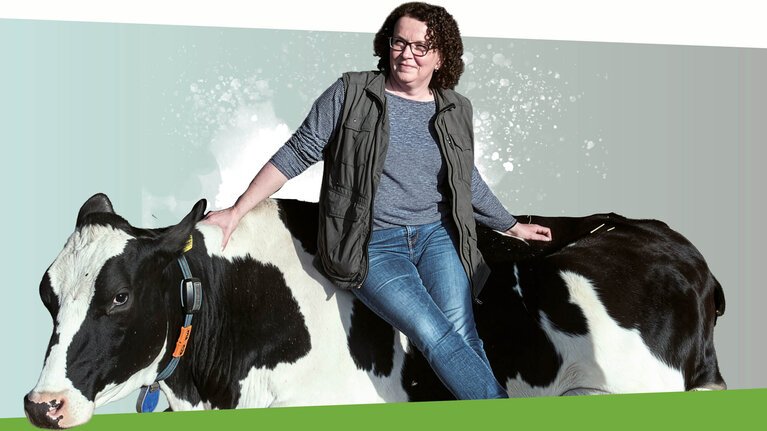
Bringing two worlds together
The course was demanding: ration calculations didn’t come easily at first, and there was plenty to learn about animal health, reproduction management and leadership. But working with the animals themselves came naturally from day one. After passing her exams, one thing was clear: she would run the farm - independently, making her own decisions, structuring things her way. That was her condition.
What followed was physically demanding, highly complex work. A dairy farm doesn’t do weekends, bank holidays or switching off. Pott coordinates a team of part-time staff, a master farmer and a first-year apprentice. The same discipline she once applied to drafting charter agreements and handling commission statements now shapes her work on the farm.
Back then, in operations, she coordinated global transport flows, liaised with ports, shipping companies and clients, and had to find quick solutions when delays or bottlenecks arose. Tight schedules, multiple time zones, constant pressure. Today, instead of goods, she manages the processes of a dairy herd: animal health, feeding, milking routines, hygiene, staffing - and key figures such as cell counts and milk components.
The industry has changed. The job, in many ways, has not: keeping track of multiple processes, making quick decisions, taking responsibility. “Shipping showed me how much I thrive on organisation, pace and responsibility. But on the farm, I see every day what I’m working for – the animals, our team, and something that lasts. That fulfils me in a deeper way.”
The numbers back her up: low cell counts, strong milk components, and an above-average herd age. In dairy farming, longevity is a quiet mark of quality – cows only stay that long if they are well cared for. “Animal welfare genuinely matters to me,” says Pott. She addresses the fact that she works in a still male-dominated field without bitterness, but with clarity: “Success on a dairy farm isn’t about gender – it’s about expertise, responsibility, commitment – and a sense of humour.”
Passing on a mindset
The next generation is already finding its path. Her daughter Anna, 25, is training to become a master farmer and will join the business. Her daughter Jette, 23, completed her apprenticeship in HR services at DMK and now works in the company’s HR department while studying business psychology.
Two daughters, two paths – both self-assured. Pott doesn’t see herself as a traditional role model. “We’re more like a team with a shared goal.” Still, she admits her children may have learned one thing: nothing is set in stone. You can take on any challenge.
In the evenings, after work, they sit around the kitchen table – sharing updates from the cowshed, stories from university, and anecdotes from the waste management business. One thing, Pott says, it will never be: boring.
That much is easy to believe.