![[Translate to English:]](https://milchwelt.de/fileadmin/_processed_/1/a/csm_20_Artikelbild_Hoch_55c4479b88.jpg)
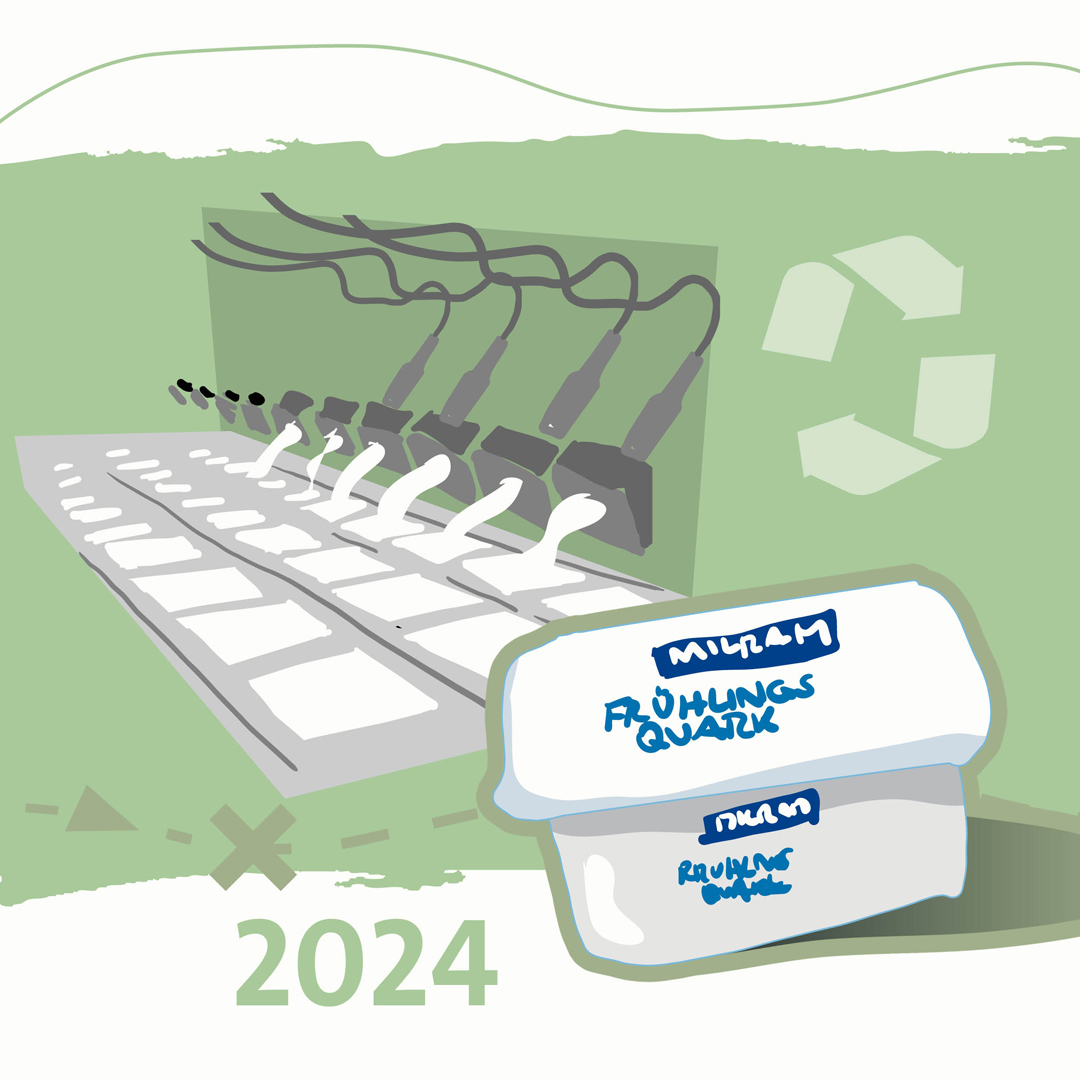
Recycling in Germany is no coincidence, but strictly regulated. Legal minimum standards define which packaging is recyclable and which is not – reviewed annually and governed by ever-evolving regulations. For MILRAM, this framework is the starting point for continuous optimisation. One clear example is the new 185-gram cup for spring quark and herb quark. Introduced in May 2024, it uses 25 percent less plastic – saving around 175 tonnes per year. What’s more, environmental service provider Interzero rates it as “highly recyclable”.
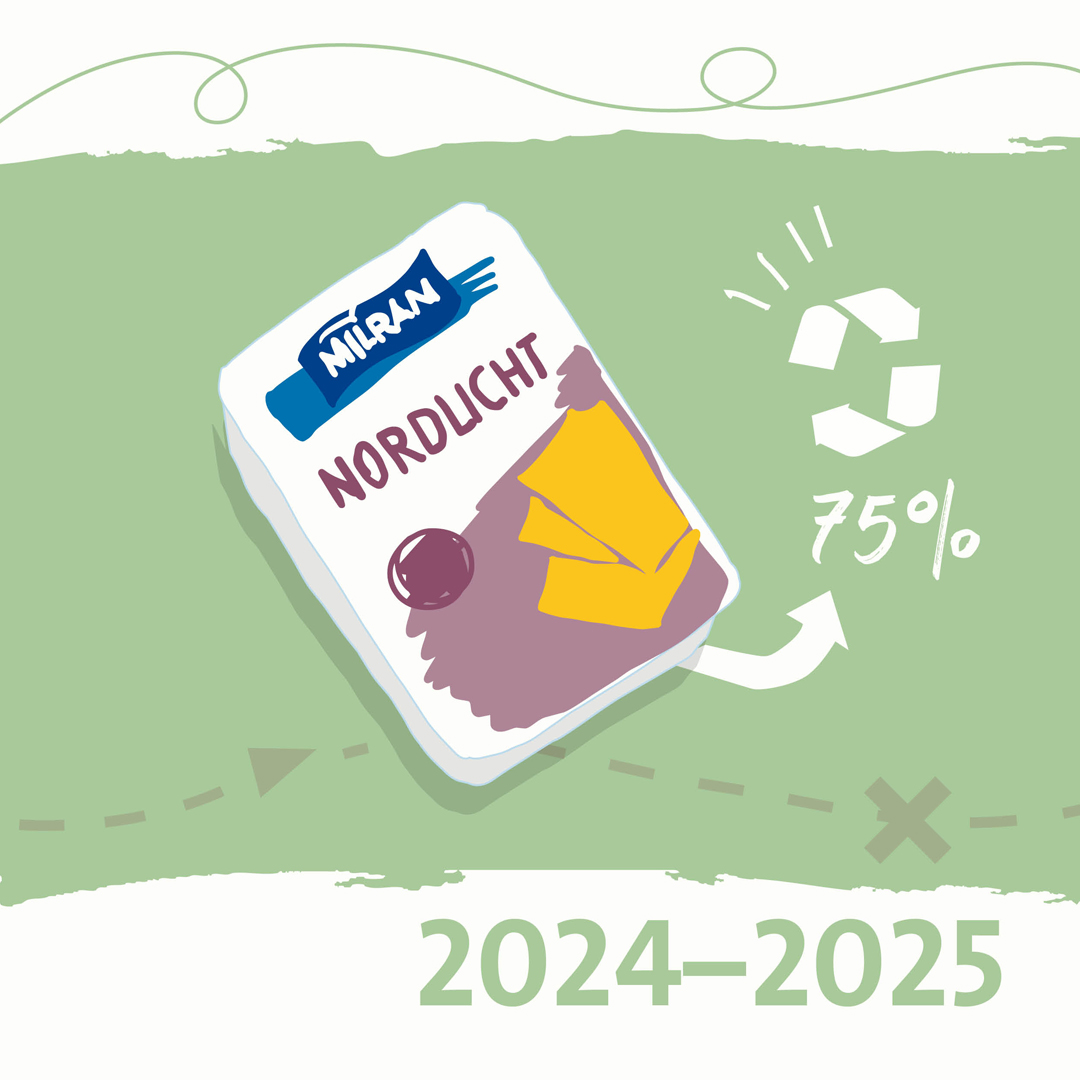
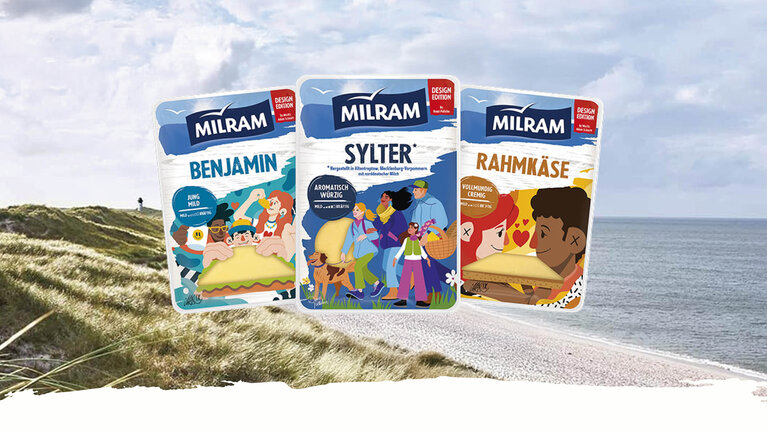
Another major project is the MILRAM self-service cheese tray. Classified by legislators as non-recyclable, MILRAM initiated a high-quality recycling solution for this type of tray. This required changes to the tendering process within the dual system and the identification of a suitable partner. Since 2024, new packaging and even clothing items have been produced from this tray material – meaning it is not only recyclable in theory, but actually recycled in practice.
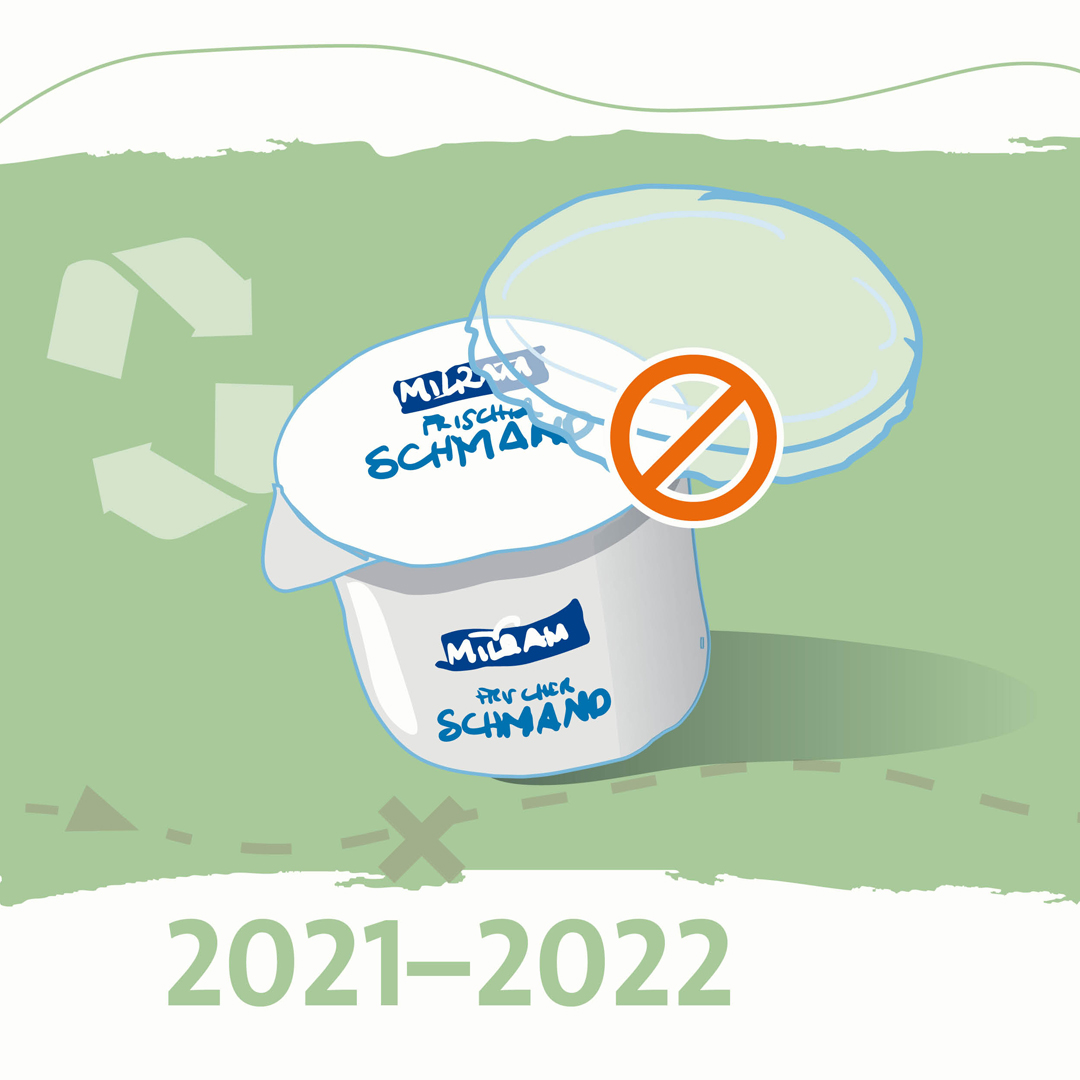
These efforts are further supported by reducing packaging materials overall. Resealable lids for cottage cheese and fresh sour cream were discontinued in 2023 – saving 35 tonnes of material annually. As early as 2022, the film thickness of sliced cheese packaging was reduced, cutting a further 85 tonnes per year.
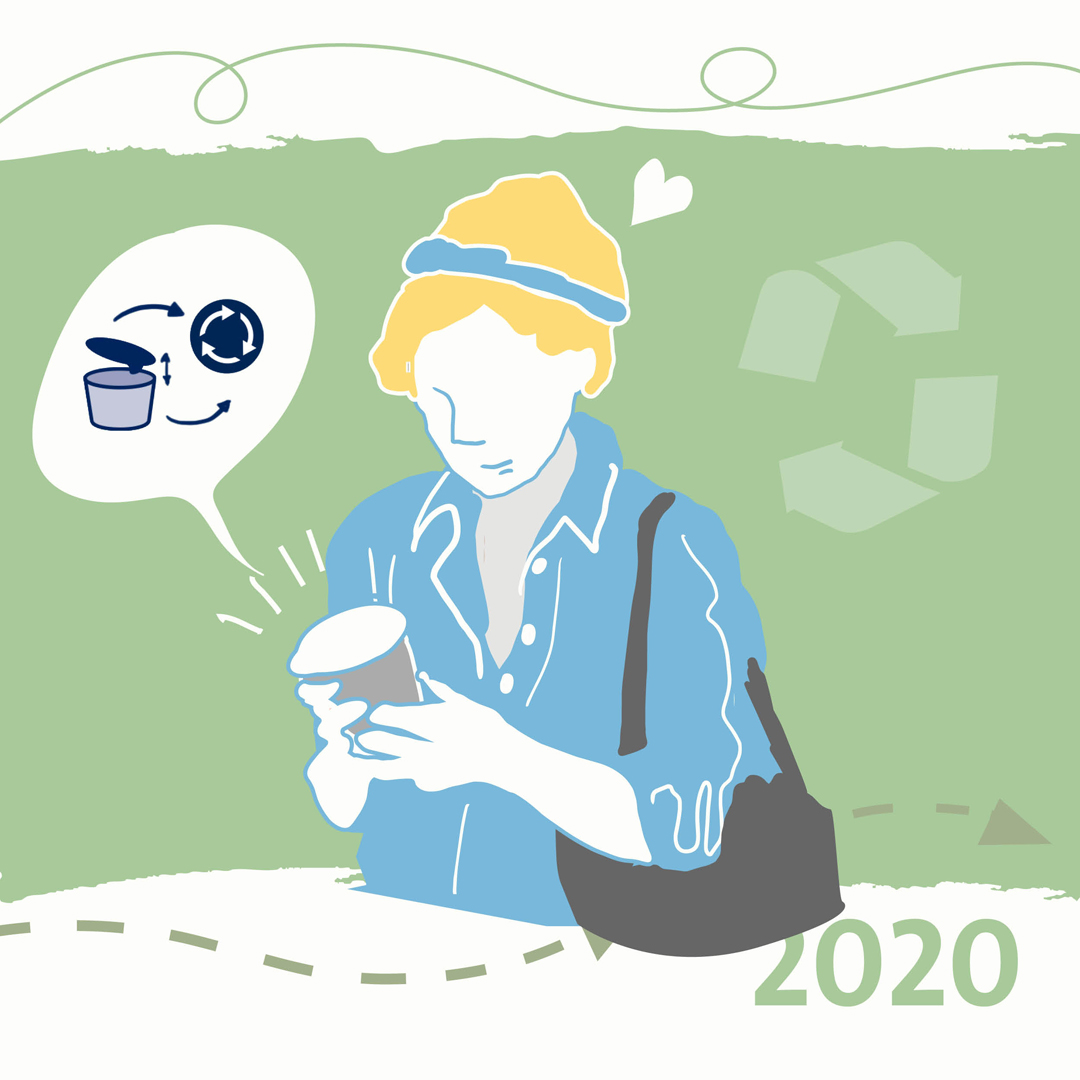
However, all of these advances only work if consumers separate packaging correctly and dispose of it in the yellow bin or yellow bag – the decisive step in the recycling loop. That is why many MILRAM products include clear disposal instructions. For example, with porridge cups, the cardboard sleeve belongs in paper recycling, the cup in the yellow bin – and crucially, the foil lid should be separated from the cup.