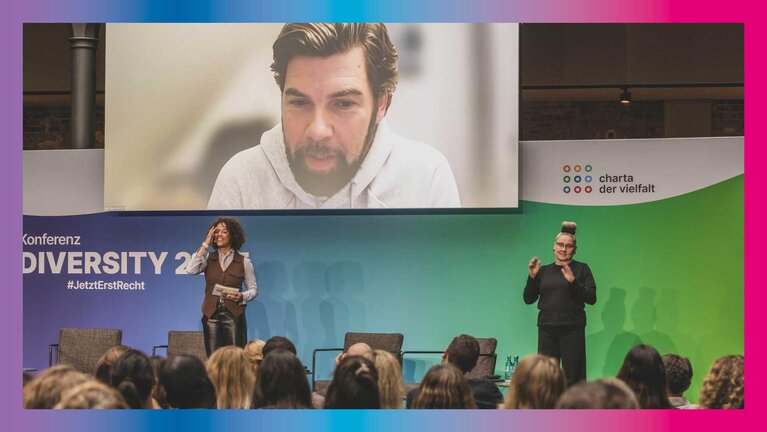
Some things arrive out of the blue, like a rain shower in bright sunshine: for example, the discriminatory and xenophobic comments aimed at the MILRAM cheese packaging showing culturally diverse people sitting together at one table. A sham debate staged by far-right circles around these packages exposed something unsettling: parts of society harbour resentment towards minorities. At the same time, the cheese packaging, straight from the chilled foods aisle, created momentum that made DMK’s stance unmistakably clear.
The company employs skilled workers from 55 nations, including minority groups such as wheelchair users, members of the LGBTQ community, and first or second generation immigrants. For DMK, diversity is not only important on a human level; it is also a creative engine for the economic success of the entire group. DMK stands for a world without borders and sends a clear signal in this area. It is about time to let minority voices be heard.
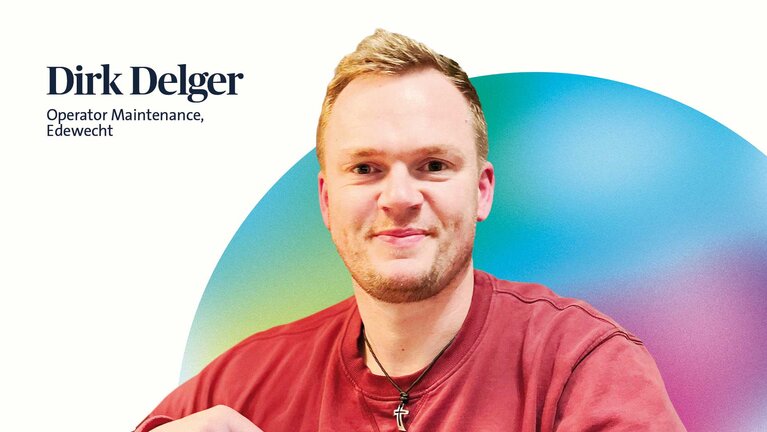
1. Dirk Delger – Operator Maintenance, Edewecht
“My coming out was something I avoided for a long time – including at work. When I married my partner in 2011, word spread quickly at DMK. My own team welcomed me warmly, but from what I heard I knew that the tone was not always the same in other areas. A remark like, ‘You can’t tell anyone’, shows how deeply prejudice can run.
At DMK I have learned how important it is to have a close environment that remains respectful - especially when you make yourself vulnerable. I was very afraid of being reduced to be ‘the gay guy’, but my colleagues saw me for what I am: a person, a team player, a colleague.
After my partner died in 2019, running gave me stability. For my marathon, I had a ‘Celebrate Diversity’ shirt printed - also as a sign within our DMK world. I wanted to show: diversity belongs to us, to our company, to our society.
Today I am seeing social setbacks again. That is exactly why it is important for companies like DMK to take a clear stand. Diversity is not a trend; it is a basic requirement for a good way of living and working together. And every contribution - even a running shirt - is a step in the right direction.”
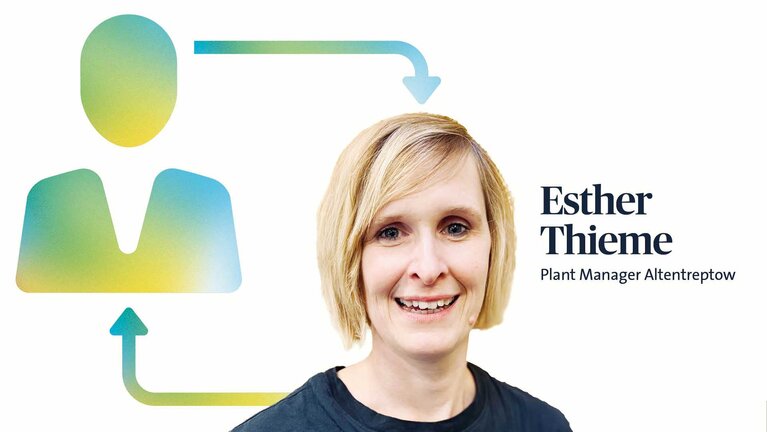
2. Esther Thieme – Factory Manager, Altentreptow
“For me, diversity at DMK is most visible in those moments when people with different perspectives come together. In male-dominated leadership circles, the engagement styles change noticeably as soon as women are at the table. Discussions become more structured and clearer, and there is greater focus on finding real solutions rather than replaying old patterns.
At DMK, I see a shift: in the past, leadership teams were very homogeneous – male, technically oriented, long-serving. Today we are consciously opening up to different career paths and life stories. That makes us stronger.
Of course, there have also been moments when I had to prove myself. Even with thorough preparation, information or decisions were initially addressed to male colleagues. Over time I learned to stay calm and to articulate clearly what I see – professionally and as a human being.
I notice exclusion at DMK mostly in small things: when someone is overlooked, when people have to prove themselves more than others. That is why it is important to pay attention. As a leader I am responsible for ensuring that nobody is implicitly being made ‘smaller’.
My advice to women is: take your courage, build a network - and above all: don’t bend yourself out of shape. At DMK we are beginning to live diversity more visibly - and that only works if each and every one of us remains clear in our own attitude.”
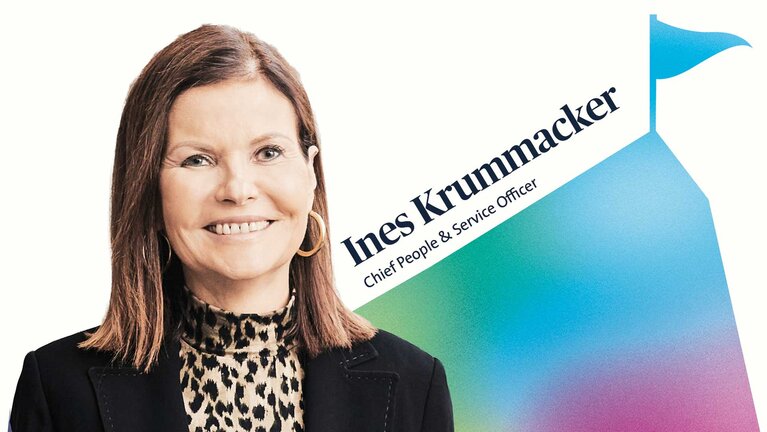
3. Ines Krummacker - Chief People & Service Officer, Bremen
“My view of diversity is shaped by personal experiences that go back long before my time at DMK. As a child, I often felt excluded - and that feeling makes me sensitive today to people who come across differently or are treated differently.
In my daily work at DMK, I experience respect as the decisive factor. I often bring in a female perspective, point out how discussions come across to women, how communication can be perceived - and I encounter openness. That is not a given, especially in an industry that has traditionally been male-dominated.
Even though I have never felt at the company that I had to assert myself ‘just as a woman’, I repeatedly encounter scepticism outside the DMK world: at events I was initially perceived more as an accompanying person than as a decision-maker. Experiences like that show how important it is for companies like DMK to make it visible that leadership responsibility is not tied to gender.
A big step for me was acknowledging that I had underestimated myself for a long time - for example because I do not have a university degree. DMK has shown me that performance, attitude and competence matter more than formal criteria.
For me, diversity is not a special topic; it is part of a modern work culture. And at DMK, I am committed to continuing to create spaces where different voices are heard - not out of obligation, but out of conviction.”
4. Nick Anders – Laboratory, Altentreptow
“My path to my gender identity has shaped me - and it has taught me how valuable it is when a company does not look away, but supports you quietly and matter-of-factly.
My transition to living as a man was expensive, difficult and full of uncertainty. Two assessors were supposed to pass judgement on my life, and every word they spoke carried power. The moment one of them saw my childhood photos and said he had never seen such a clear-cut case was a turning point for me.
At DMK, my transition was not made a big talking point. Nobody pigeonholed or treated me unusually. I was seen as a colleague - and as a person. At the time, some managers even supported me financially so that I could manage all the court proceedings. The support was not loud, but it was essential.
Today I want to be judged by my work performance, not by my past. I enjoy the sense of normality in our lab. Most colleagues are open with me. Some are surprised that I am ‘just normal’. But that is exactly the point: normality happens when you allow people to be themselves.
For DMK, I hope we remain open to stories like mine - and to everyone else who is looking for their own path. Diversity has the greatest impact when it does not divide us, but connects us.”
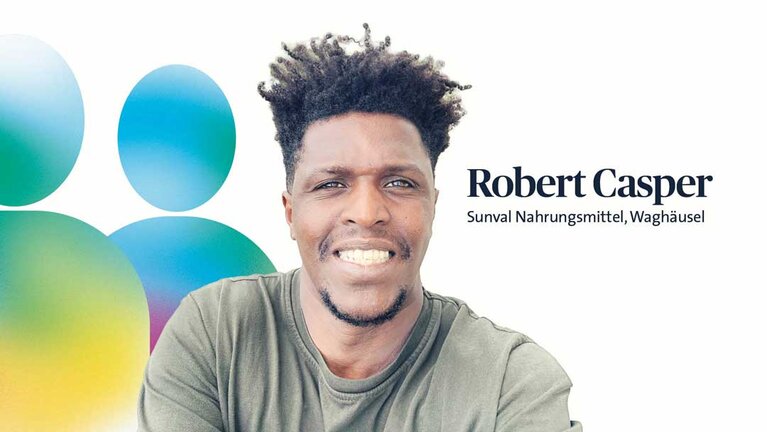
5. Robert Casper – Sunval foodstuffs, Waghäusel
“I was the only dark-skinned child in my town - without even knowing that was unusual. I integrated seamlessly through sports, school and friends. Perhaps that is why diversity, to me, is something you live rather than debate.
At Sunval with DMK Group, I now work in a team as colourful as I would have wished for as a child: colleagues with very different life stories from different countries, age groups and religions. In most situations, my skin colour plays no role. What matters is how we work together.
In a physically demanding area, I also see challenges. When colleagues are frequently absent, the workload increases for everyone else. For me, equity or fairness means distributing burdens fairly - without pushing anyone to the brink. In the end, that is also diversity: sharing tasks fairly depending on what they require.
More aspects I notice about diversity in our company: in conversations, men often appear more dominant. Women sometimes hesitate to contribute, even though they have just as much to say. For a company like DMK it is important to consciously create spaces where every voice counts.
What I say about DMK is: nobody is perfect, but we are moving in the right direction. And we should have the courage to talk about it. Especially at a time when social divison is deepening, a company that lives diversity is an important counterweight.”
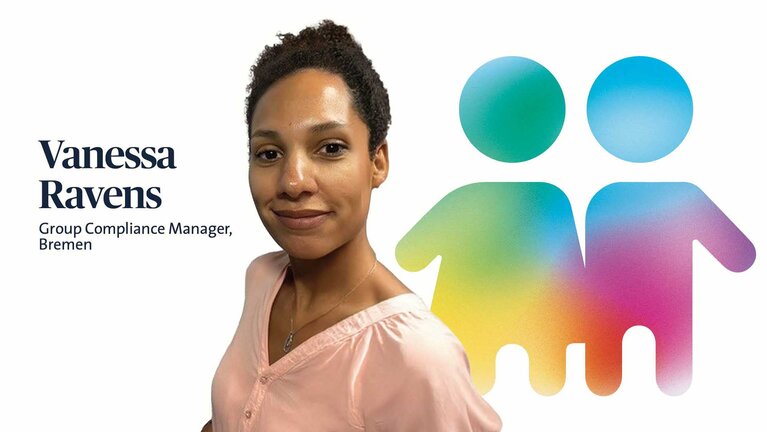
6. Vanessa Ravens – Group Compliance Manager, Bremen
“My start at DMK showed me how much a single moment can change. As the mother of two small children and working part-time, I was often made to feel that professionally I was not the first choice. Many companies assume full-time performance – everything else is seen as a compromise.
In my interview at DMK that concern evaporated within seconds. My future manager apologised for having her phone on the table – she needed to keep an eye on the children. That honest way of dealing with reality immediately resonated with me. It was the first time that being a mother was not treated as the elephant in the room, but something I could simply mention as a matter of life.
DMK hired me even though I ‘only’ work 30 hours a week. Today I notice every day how naturally work-life integration is lived here. My manager makes sure the workload in the team remains realistic, and checks in when things get tight. Many colleagues have children - that creates understanding you cannot fake.
At the same time, I experience diversity at DMK in the international environment every day: different cultures, different ways of working, new perspectives. It can be challenging, but it is enriching too. And it shows that DMK does not just communicate diversity – it lives it.
It matters to me to speak up when conversations get out of hand or prejudice steps to the front – including in my private environment. People easily forget that because of my skin colour I could myself be a target of some of these judgements.
For the future I hope that at DMK we keep looking closely: at pay, leadership, barriers. And that we also talk about it when we do things well. Diversity is not a project – it is an attitude that has to be lived every day. And I am proud to be part of it.”
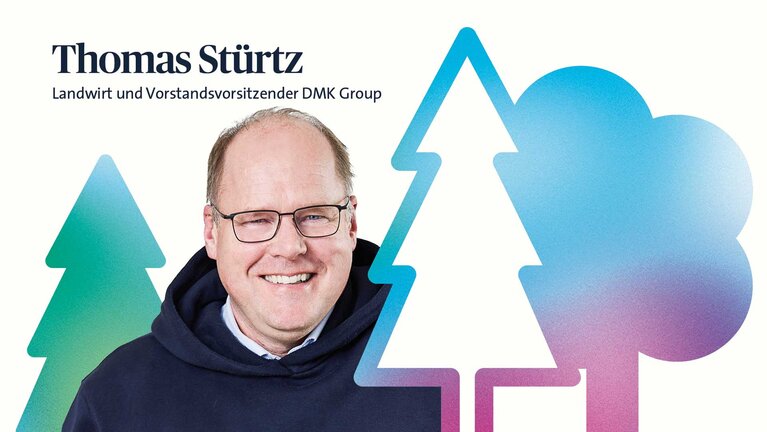
7. Thomas Stürtz - Farmer and Chairman of the DMK Board
“For my farm, it is important to include employees of different nationalities because, first and foremost, it is about reliable work. What matters to me is that people are motivated and treat the animals well – where they come from ultimately makes no difference. Over the years I have learned that diversity is not an end in itself, but a necessary prerequisite for running the business in a stable way. On my farm, three Kyrgyz workers and a milker from Uganda live and work, two of them with their families.
Our cooperation follows the principle: ‘What goes around comes around.’ If I treat my employees with respect and create clear structures, I receive the same treatmentback. Providing good accommodation is an important ascpect for me of course. I make sure people live in decent shared flats or – even better – in their own apartments with enough privacy.
Language integration usually works step by step. Many develop their German through daily practice – learning by doing. Over time I see how confident they become with language, animals and technology. One of the biggest challenges is bureaucracy. But diversity enriches us and more than compensates for the effort involved in visas and integration. One-year agricultural placements are comparatively easy to organise, but extensions or skilled-worker visas cost a lot of time and energy. I also observe that authorities have become more hesitant in processing applications.
Particularly enriching is how well many international employees handle the animals. At the same time, cultural diversity requires empathy. I have to be sensitive, recognise conflicts early and foster respectful cooperation. It is inspiring to see how new influences enrich everyday life – provided everyone treats each other with appreciation.
A heterogeneous team broadens my perspective. My work-life balance is affected by bureaucracy and accommodation issues, but the reliability of motivated employees makes up for it.”
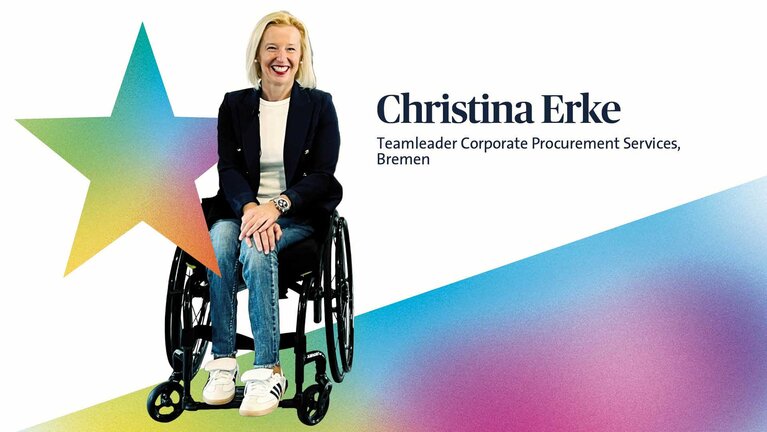
8. Christina Erke – Senior Project Manager Quality & Strategy, Corporate Quality Management (CQM), Bremen
“Since I was twelve years old, I have used a wheelchair as a result of a severe flu-like infection. After a long hospital stay I was able to go home again, but immediately the question arose of how my schooling would continue. My headmaster at the time did not want to let me return to grammar school. My parents, however, fought with great determination to ensure I did not have to switch to a special needs school. Looking back, I am grateful that today inclusivity plays a greater role.
For me, diversity is far more than a buzzword – it is a real success factor. Different perspectives, experiences and abilities make teams more creative, more solution-oriented and more resilient. I was hired according to exactly this principle: it was not my disability that mattered, but my skills. And that attitude still shapes our collaboration today.
As I started my career, I faced the question of whether I should mention my disability in my CV. Many warned me it could be a disadvantage. My experience, however, shows the opposite: I was transparent - and at DMK it never mattered. My former manager even confirmed to me recently that my disability was not an issue when I was hired. At the same time, the company has always reacted pragmatically: accessible facilities, support on site, and colleagues who helped in an uncomplicated way.
I also know that not all companies act like this. Reports about circumventing legal quotas and a lack of participation show how much there is still to do. That makes it all the more important to talk about it and to show that inclusion can work – if you truly want it. DMK has even committed to exceeding the legal quota of five per cent and reaching seven per cent.”
“Having values is not a one-hit wonder.”
The MILRAM cheese packaging triggered unexpectedly strong reactions last autumn. DMK’s Head of Communications, Oliver Bartelt, explains why debates around identity escalate so quickly today – and why clear values make the company stronger, not weaker.
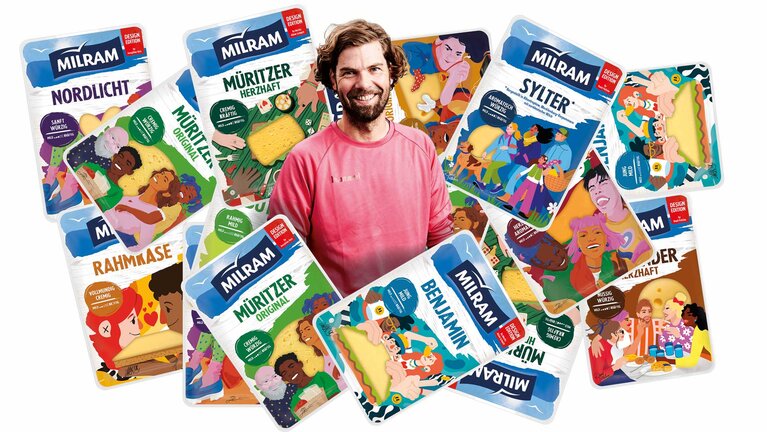
Mr. Bartelt, the design edition of the MILRAM cheese packaging was really only meant to show normality. Why did it become so politically charged?
Our marketing team did not want anything political; it wanted to depict reality. But identity polarises – and in the current climate especially strongly. The Edelman Trust Barometer 2025 shows how tense the situation is: 69 per cent of Germans harbour strong resentment towards government and business because they believe institutions act in their own interests. Thirty-eight per cent even support hostile measures such as online attacks or disinformation to force change – among 18- to 34-year-olds, it is as high as 59 per cent. The study speaks of a “crisis of grievance”. At the same time, fear of discrimination stands at 63 per cent – a record. That explains the emotional intensity: diversity immediately becomes an identity issue. The cheese packaging was not the cause, but a projection screen.
How did this reaction influence your internal approach?
We were extremely quick with monitoring and identified the source of the criticism immediately. That clarity made us stable. We knew: the outrage had little to do with our content, but a lot to do with the social climate. It had little to do with real consumers, but a lot to do with political staging. We remained steady because we know our values - that was decisive, because it gave us the basis for our responses.
Your farmers clearly stood by the campaign despite the pressure. Has the image of the supposedly “conservative farmer” changed?
Of course there was uncertainty at the start - social media often looks bigger than it is. But through transparent analysis and a lot of dialogue, we were able to show where the criticism really came from. That created security. As a cooperative, we are used to compromises, but in this case backing down would have been the easy option. Instead, we chose courage. If you know your values, you can convince others too.
Did you feel support within the industry?
In individual cases, yes. But overall, in the decisive moment, it was rather quiet. Afterwards, many sought an exchange - also because they wanted to learn from our approach. We need much stronger networking to strengthen values together. Internal clarity was our compass.
Has the debate changed DMK’s image?
Yes – positively. Having values builds trust, even when it polarises. We notice that with customers just as much as with applicants. The human factor becomes a USP – the distinguishing feature.
And today: would you do it again?
For us, diversity is not a marketing topic; it is a reflection of reality. Having values is not a one-hit wonder. The positive media response showed us that clarity works. So we will continue to let our values guide our work and our decisions.