Today, organisations rarely suffer from a lack of information. More often, they suffer from too much of it. Processes, programmes, initiatives - everything is available, explained and documented, yet much of it still disappears into the routines of daily business. Attention has become the scarcest resource. Not only externally, but internally as well. Anyone who wants to move an organisation forward therefore needs to do more than simply provide facts. They need to create meaning. At DMK Group, there was such a moment around 2020. The figures were not bad, strategies had been defined and projects were underway. And yet there was a lingering sense that the organisation was moving more slowly than it should. The company had already tried many approaches. Teams developed efficiency models, cost-reduction programmes and carefully designed concepts for better workflows. On paper, everything made sense. In practice, the reality sometimes looked very different. “We had many good ideas – but they never truly arrived in everyday operations,” says Oliver Bartelt, Head of Corporate Communications at DMK. “The problem wasn’t a lack of concepts. It was a lack of connection.”
Everything needs storytelling
The initiatives were theoretically sound, but too abstract for day-to-day working life. The question almost inevitably emerged: why aren’t our ideas taking hold? What became visible here is a classic organisational problem: the more complex programmes become, the more abstract they appear. And the more abstract they seem, the lower the chance that they will actually change behaviour. Information alone does not create movement. “We knew that if we launched another traditional programme, exactly the same thing would happen again,” says Bartelt. “So we deliberately tried not to communicate a process, but to tell a tangible story instead.” TIGER stands for one simple principle: make problems visible, act immediately and keep responsibility where the work actually happens. No escalation upwards. No collecting issues for the next quarterly meeting. Instead, there are short daily meetings around shopfloor boards directly on the production line – with cross-functional teams combining different areas of expertise and often generating entirely new knowledge in the process. The approach is used equally in production and office environments, helping avoid mistakes that cost both money and resources. What teams from production, quality management or maintenance see together carries far more depth than any isolated perspective ever could. The next day immediately shows whether an attempted solution worked. If it works, it becomes the new standard. If not, it is refined further. That is how progress emerges – not through giant leaps, but through many small improvements that gradually add up.
From paper to practice
The best way to understand TIGER is through everyday life – and everyday life at DMK today looks very different from what people might expect from a dairy company. Anyone entering one of the plants encounters the tiger immediately: at lift doors, as paw prints on the factory floor, in large wall graphics or on posters promoting new improvement initiatives. This is not decoration. It is intentional. “If we want behaviour to change, we need an image that stays in people’s minds,” says Bartelt. “Not another PowerPoint presentation, but something people see every single day – and talk about.” And all of this happens against the backdrop of what Bartelt describes as an age of total information overload.
”In the past, we often analysed problems until they became outdated”

Visual and emotional impact
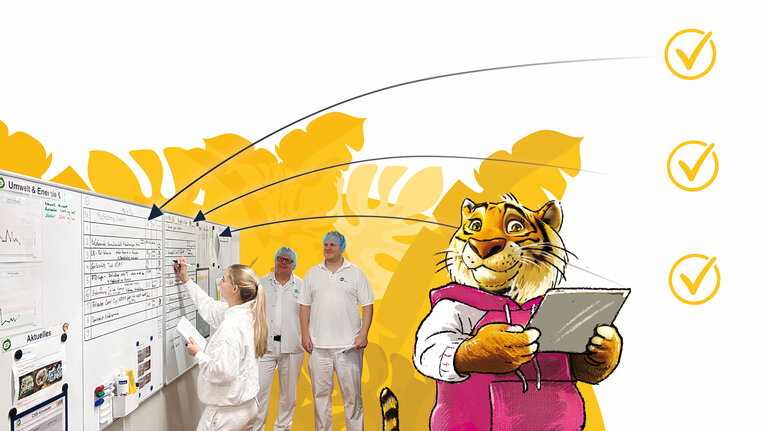
The tiger symbolises strength, focus and hunger. Short, international and visually powerful. It was deliberately developed as a brand – not as an acronym that first needed explaining, but as an image with immediate impact. Bartelt remembers clearly that this was far from universally accepted at first. Particularly in engineering-driven departments, the initial reaction was sceptical: storytelling? We need processes! But then it became visible how teams gradually started communicating differently, making decisions differently. The story carried the transformation forward. Without the visual impact, says Bartelt, the mindset shift would never have happened. Today, TIGER shopfloor boards hang throughout the plants, displaying the most important daily figures: performance, quality, downtime and deviations. None of those numbers are new. What changed is what happens afterwards. Problems no longer disappear into reports or meetings – they remain visible until they are solved. Teams discuss them directly on site, often standing together for just a few minutes. Anyone spotting a problem is no longer merely reporting it, but becomes part of solving it. Decisions are no longer escalated upwards, but made where the information actually exists. “In the past, we often analysed problems until they became outdated,” says Bartelt. “Today, we try to make them visible – and start working on them immediately.”
A question of mindset
None of this is spectacular. But it is relatable. And above all: repeatable. “A mindset only becomes a movement when it can be told as a story,” says Bartelt. At the same time, the question remains how permanent such changes really are. Many initiatives fail not because of the idea itself, but because of their limited lifespan. As soon as attention fades, old routines return. TIGER is no exception. “In the end, this is not a condition you permanently achieve,” says Bartelt. “It’s something you have to recreate every single day.” The answer to how a company becomes slightly better every day is unspectacular – and precisely because of that, difficult to implement: by not waiting for one huge breakthrough, but taking the next small step. “Stay hungry,” says Bartelt. “That’s not a slogan. It’s a mindset.” And perhaps that is the real lesson of this story: in a world where organisations communicate constantly, success or failure is not determined by the amount of information available. But by the quality of the stories that give people direction.
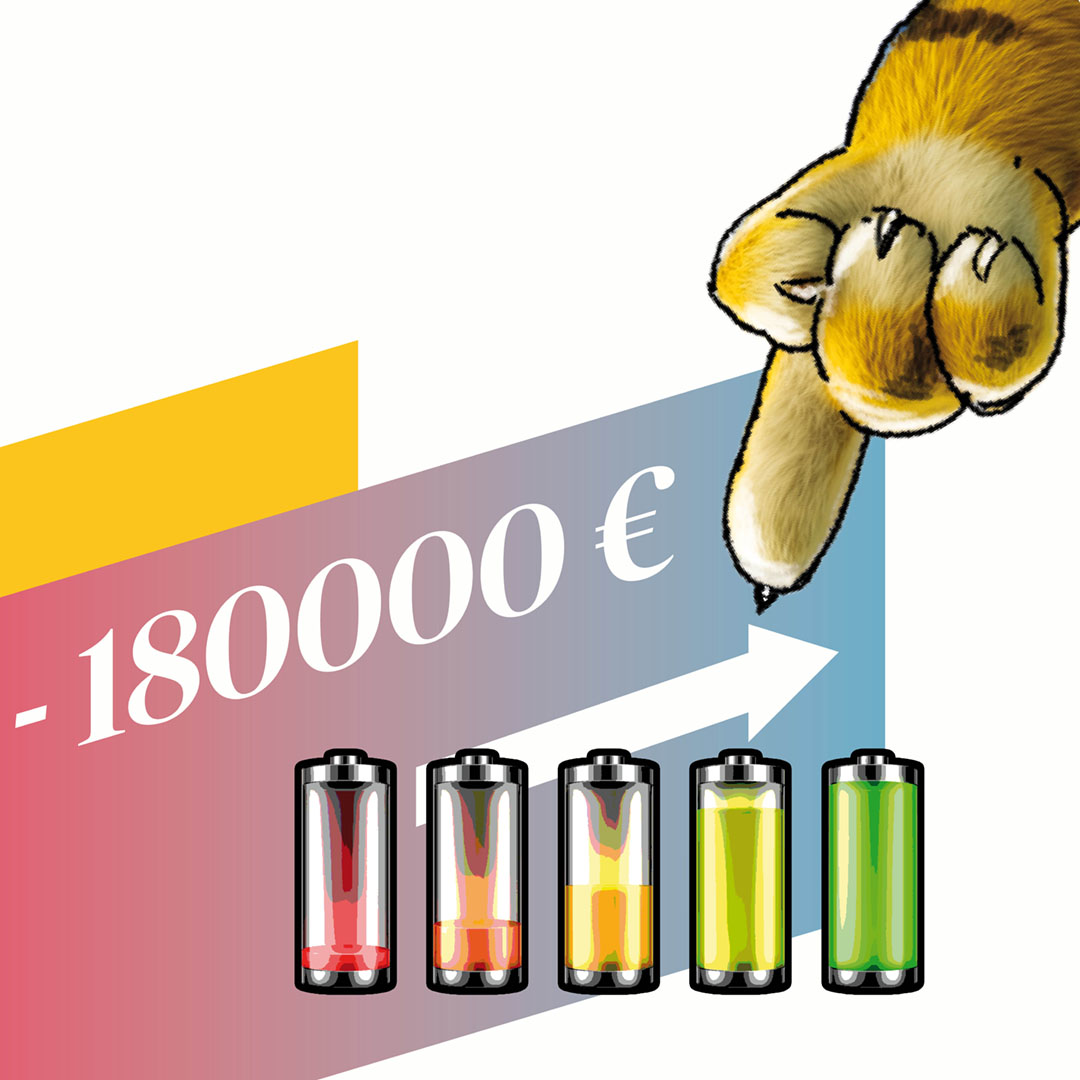
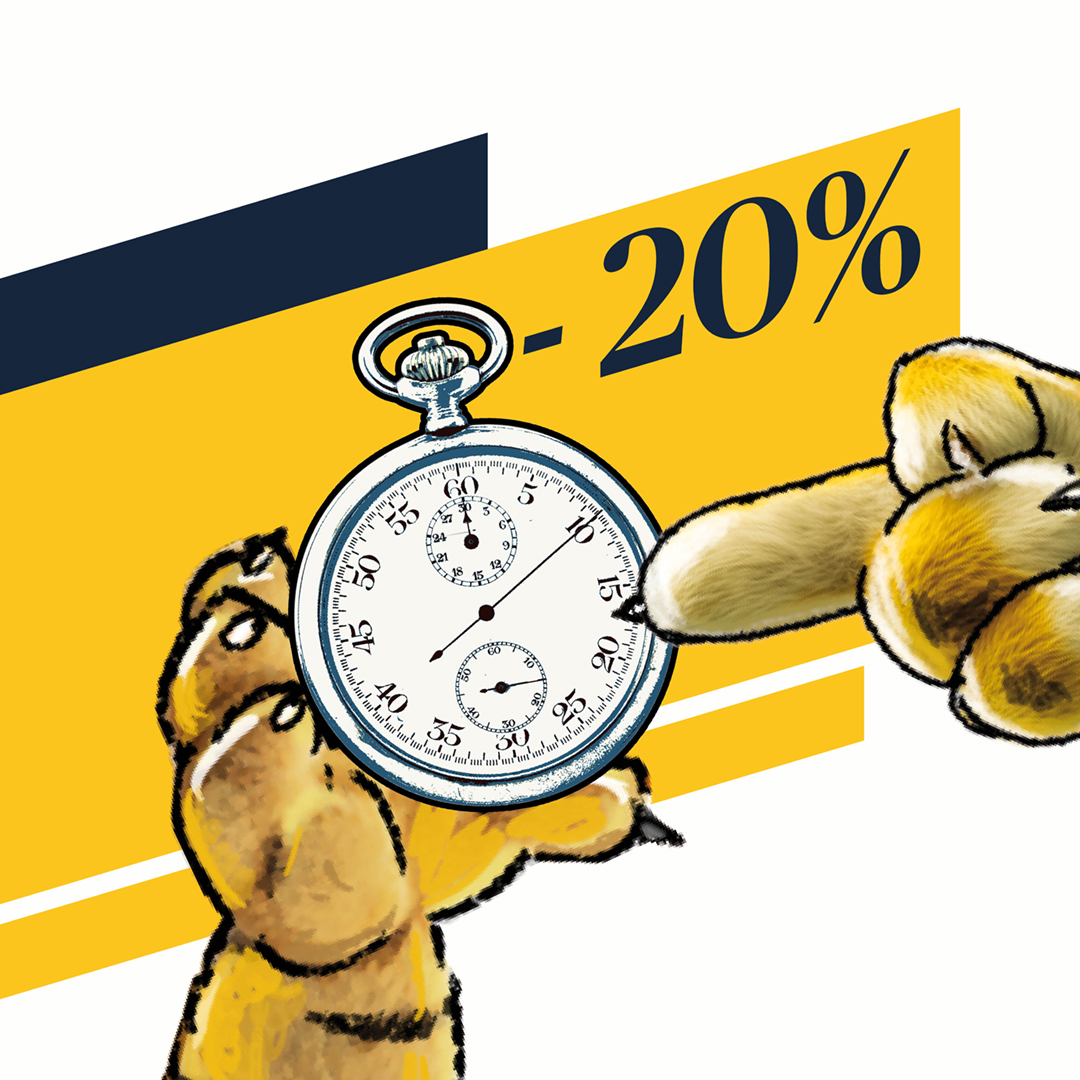
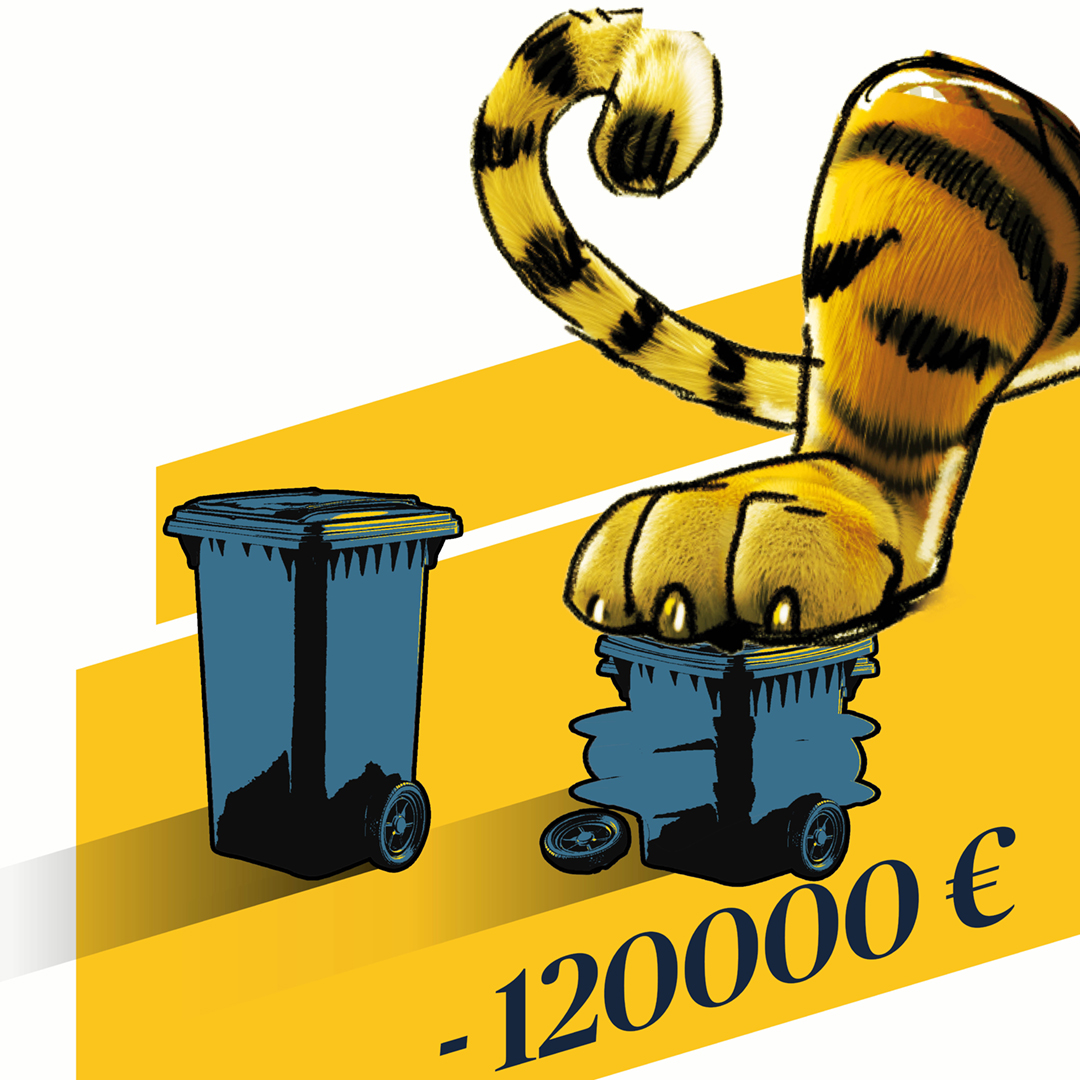
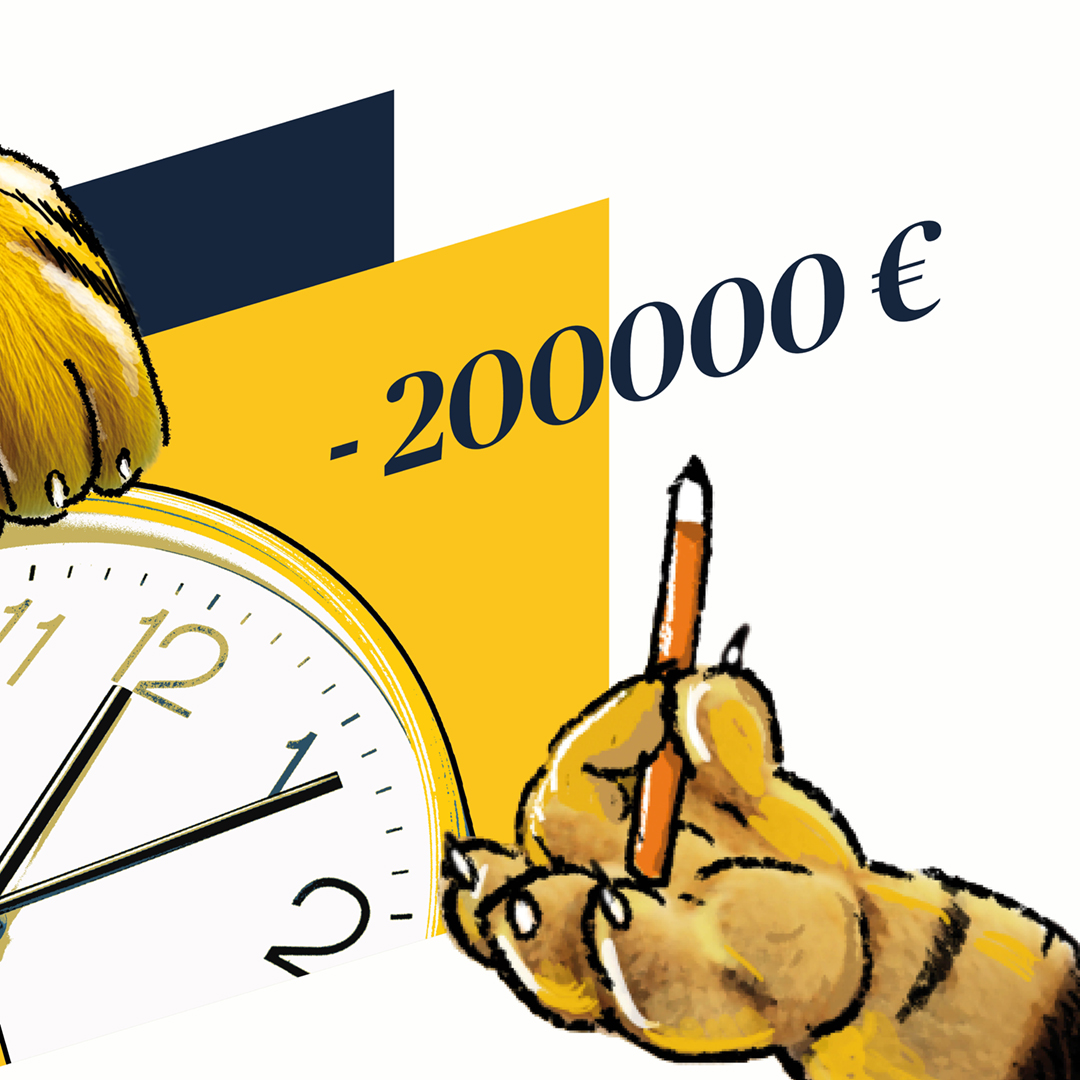
What the TIGER efficiency programme has already achieved …